Dan Collison

LinkedIn

Case study

Visibly B2B SaaS

From product chaos to product-market fit

Project overview

Team

  • Product designer (me)

Timeline

  • September 2024 January 2025
  • 5 months

Impact

I returned the business to growth with products that now have customers.

What I did

  • Product consultancy
  • Customer research
  • User experience design
  • User interface design
  • Invented AI features
  • Ran Agile ceremonies

I rescued this business!

When I came onboard the business lacked any clear direction.

They were operating across multiple online and offline verticals, and the digital product suite had become a collection of siloed features built for individual customers - a dead end for growth.

I researched and redesigned the software to find product-market fit - and the business is now growing with customers self-serving on a unified feature set.

About Visibly

Visibly is an early stage B2B SaaS tech startup in the industrial sectors workforce compliance and training space.

Their customers are industrial asset owners, their contractors, and lower level supply chain actors. The primary product users are workforce compliance managers and health and safety operatives.

They have 7-10 permanent employees and a 2-3 person C-suite.

I came onboard mid-2024 as their first full time product designer.

Pre project

Making a bold statement

Designer to consultant in 48 hours

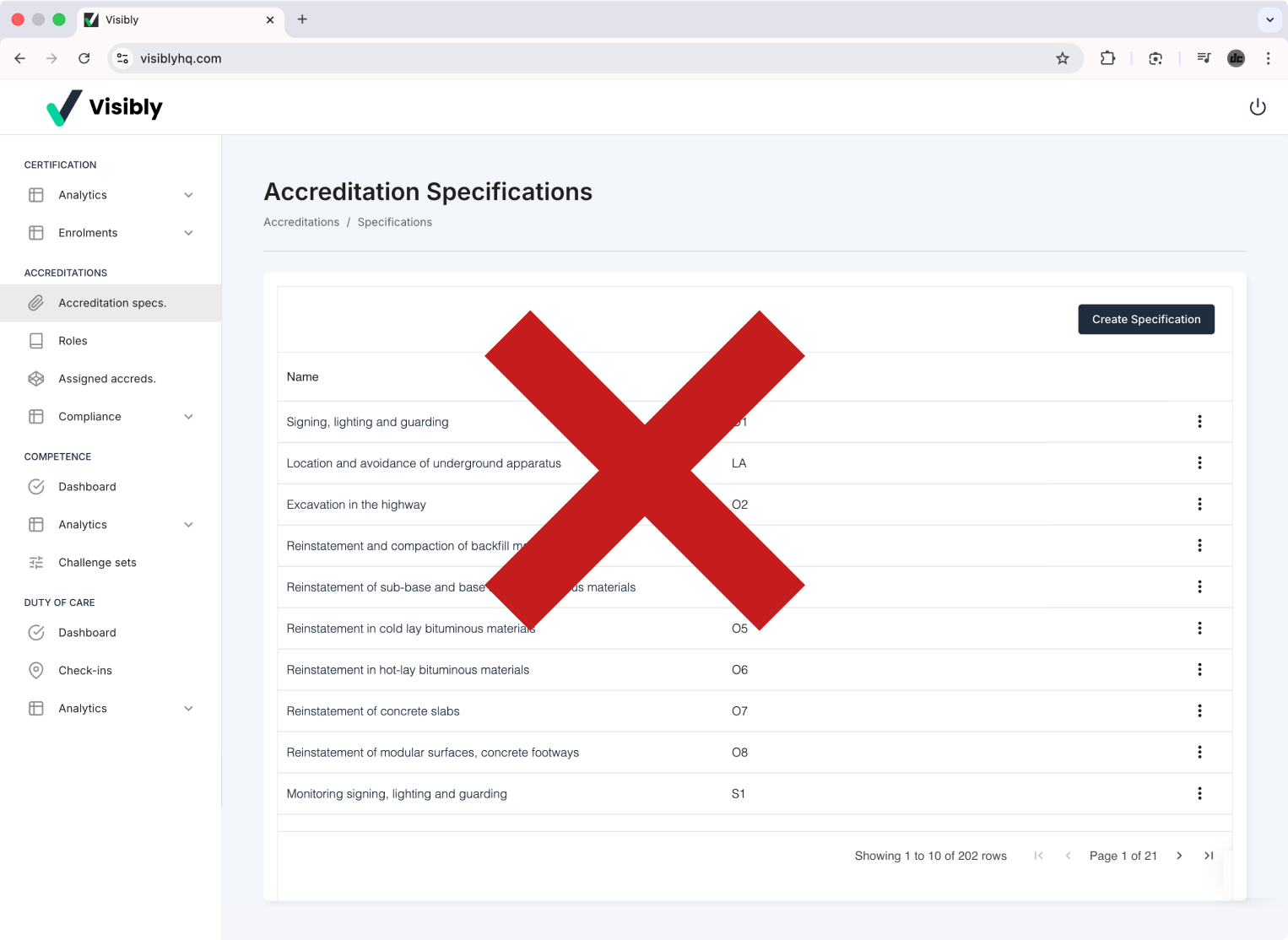
On day one I conducted an heuristic evaluation. On day two I recommended all products be started over from scratch.


The main reasons were

There was no common feature set across all customers

The information architecture was beyond repair

The copy was laden with jargon and inaccessible language

The UI styling did not portray a commercially viable product


I planned projects for both products - the workforce management desktop web app and the mass market worker mobile app.

I planned projects for both products - the workforce management desktop web app and the mass market worker mobile app.

Project one

Desktop web app

Research and requirements

I ran a series of customer interviews.

I spoke to workforce managers, health & safety directors, and onsite compliance checkers about their day to day processes, industry tools and ways of working, the challenges therein, and their requirements for a digital product.

Customer research

Discovered core requirement

Covered by legacy product?

If so, done well?

Real time visibility of individual worker and aggregate workforce role compliance

Complete top-down visibility of supply chain workforce role compliance

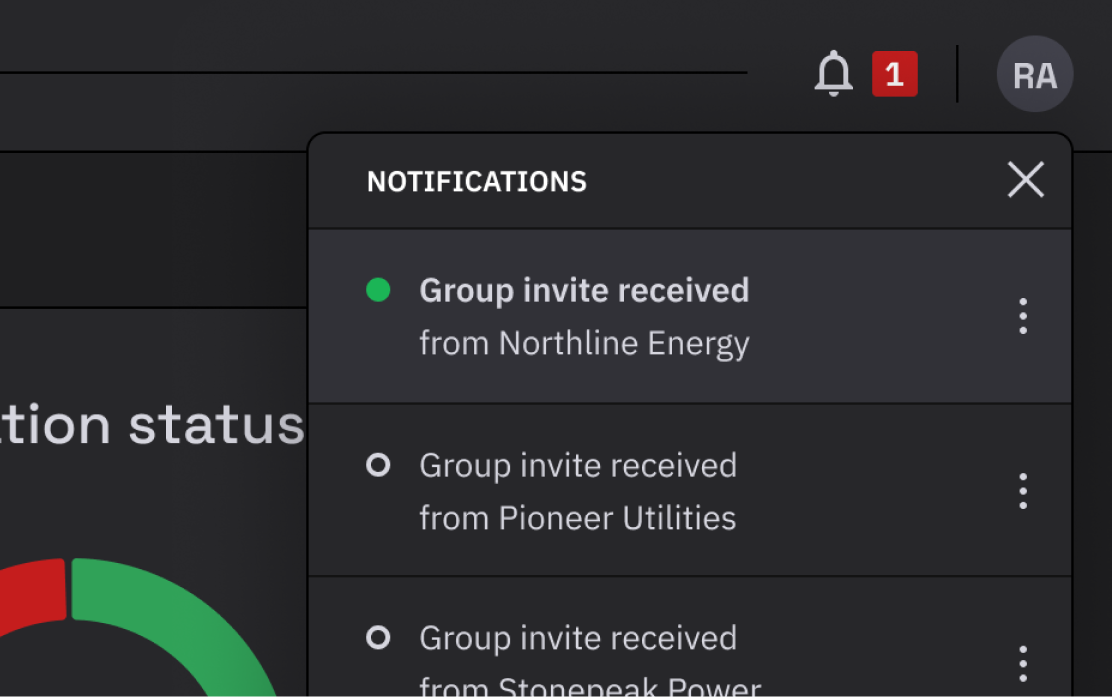
Notification system for upcoming worker role compliance status changes

Automated product process to enrol unaccredited workers onto courses

Platform for creating and sharing workforce communications

Discovered core requirement

Real time visibility of individual worker and aggregate workforce role compliance

Covered by legacy product?

If so, done well?

Discovered core requirement

Complete top-down visibility of supply chain workforce role compliance

Covered by legacy product?

If so, done well?

Discovered core requirement

Notification system for upcoming worker role compliance status changes

Covered by legacy product?

If so, done well?

Discovered core requirement

Automated product process to enrol unaccredited workers onto courses

Covered by legacy product?

If so, done well?

Discovered core requirement

Platform for creating and sharing workforce communications

Covered by legacy product?

If so, done well?

The findings showed the legacy product did not meet the core needs of prospective customers

Prototypes and testing

I designed the complete product MVP.

I went through six rounds of design with internal and customer feedback across three months to reach a product solution where all the core features stood strongly in their own right while also flowing naturally into one another.

Prototypes and testing

Video contains sound

Example feature 1

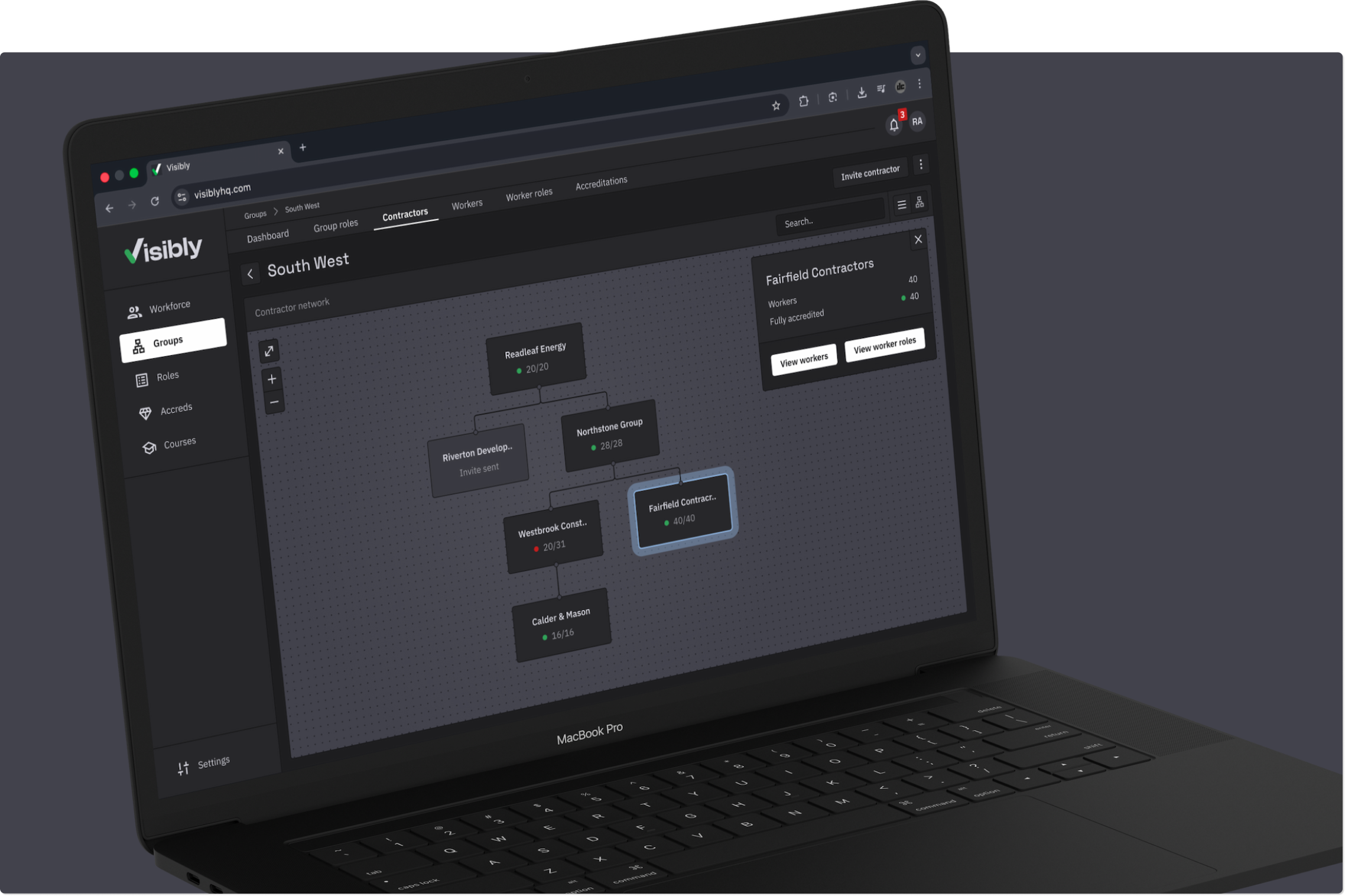
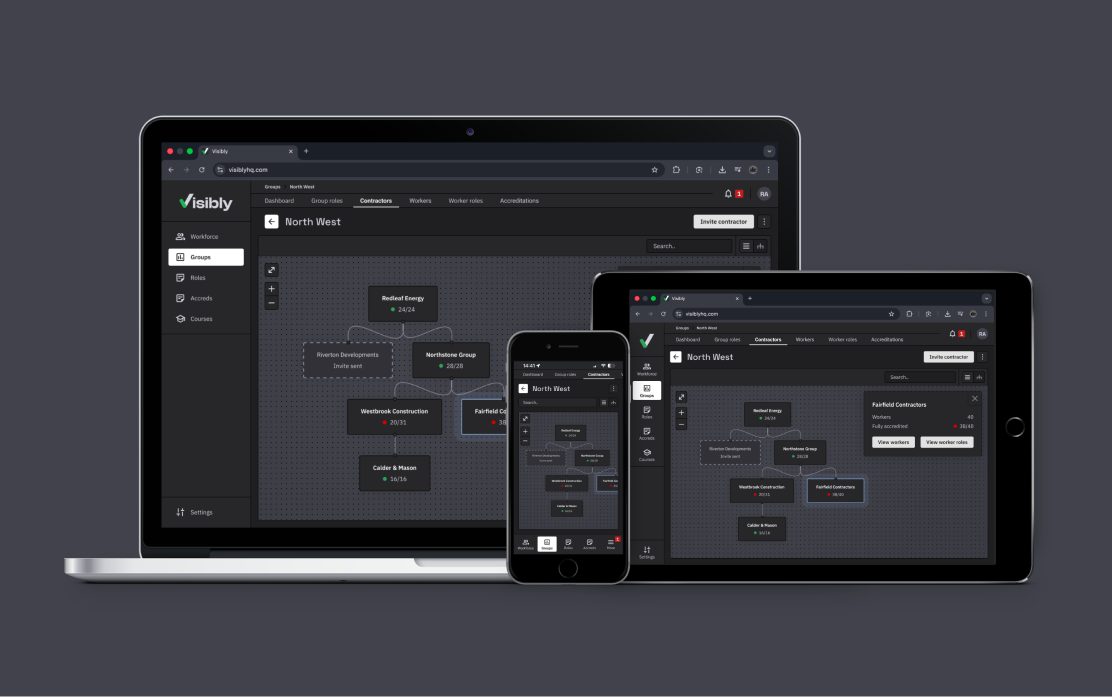
A data table that converts into a node network diagram, allowing the user to easily identify and resolve compliance anomalies within a large workforce supply chain.

The feature was described as 'a game-changer for the industry' by a senior Openreach executive who I consulted with regularly during the project.

AI feauture

Video contains sound

Example feature 2

These AI assistant features reduce the user's workload when creating and sharing workforce-wide health and safety communications.

Customers indicated they would be happy to use the features as they would simplify writing tasks while leaving the option for final edits and approval squarely in their hands.

UI design

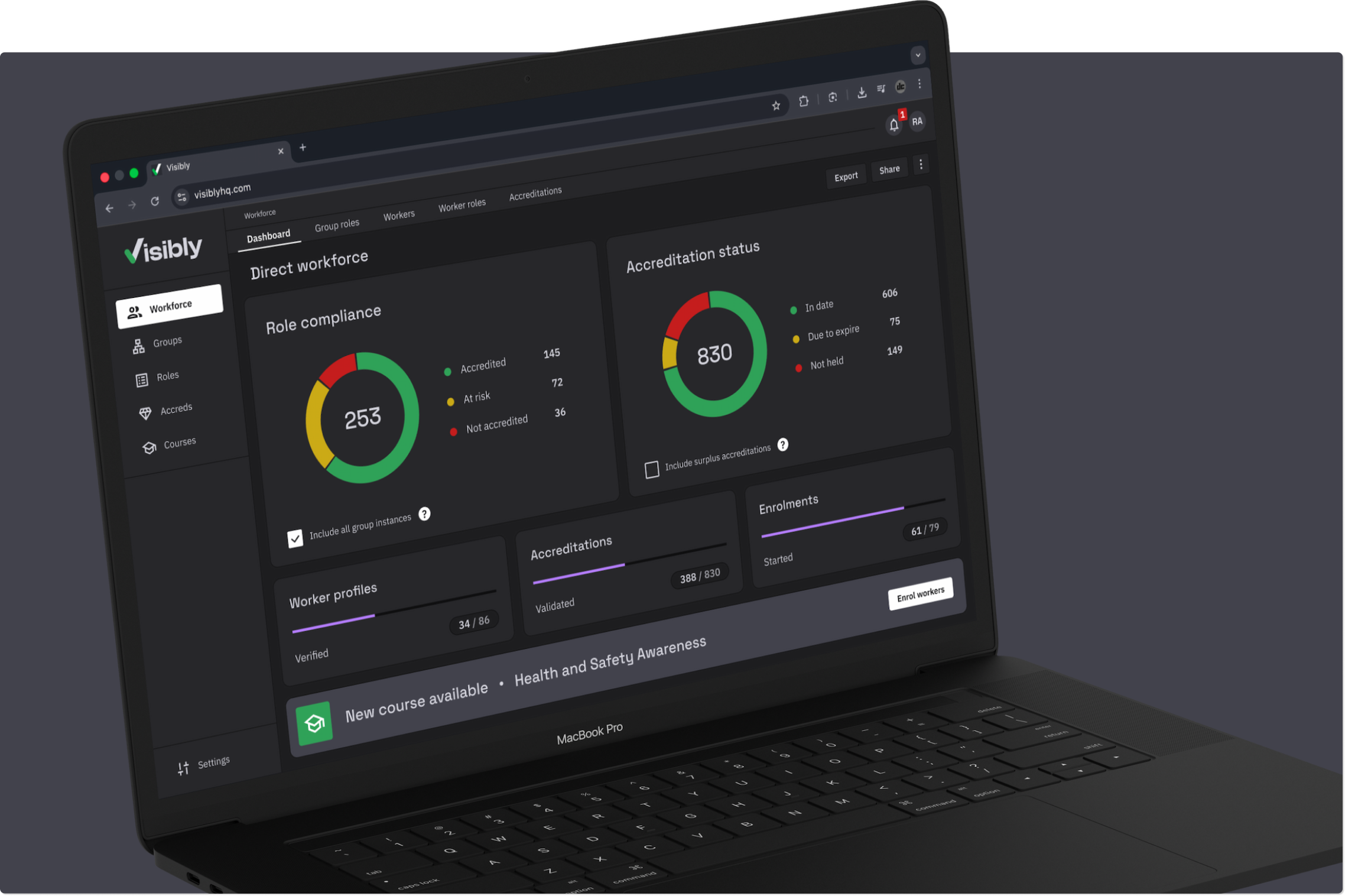
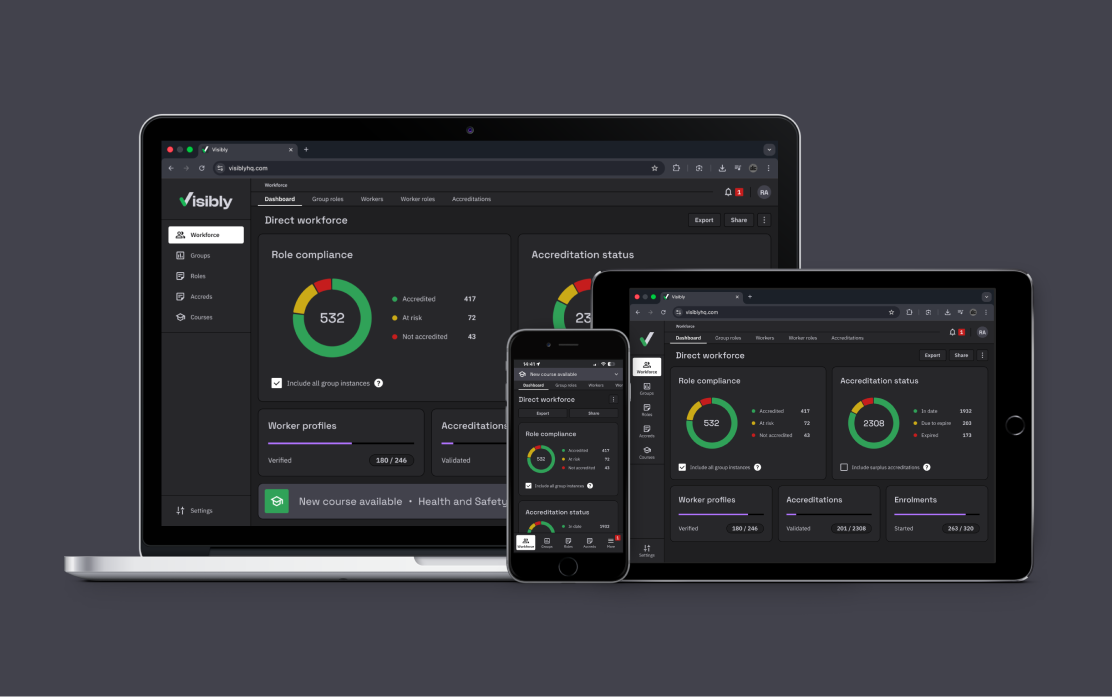
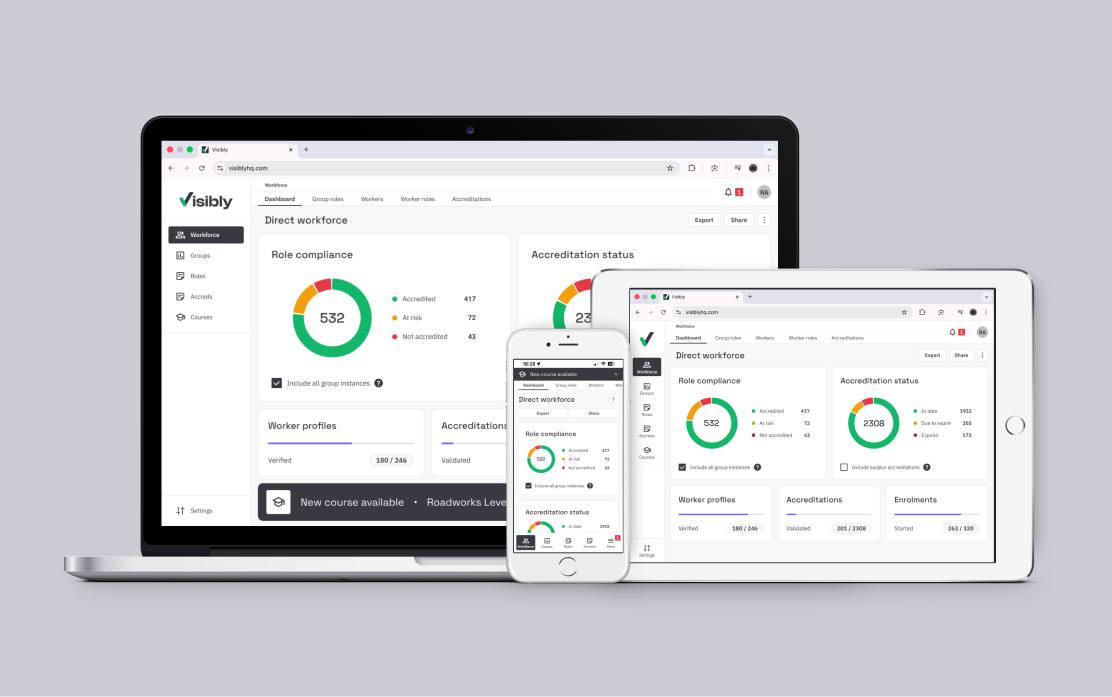
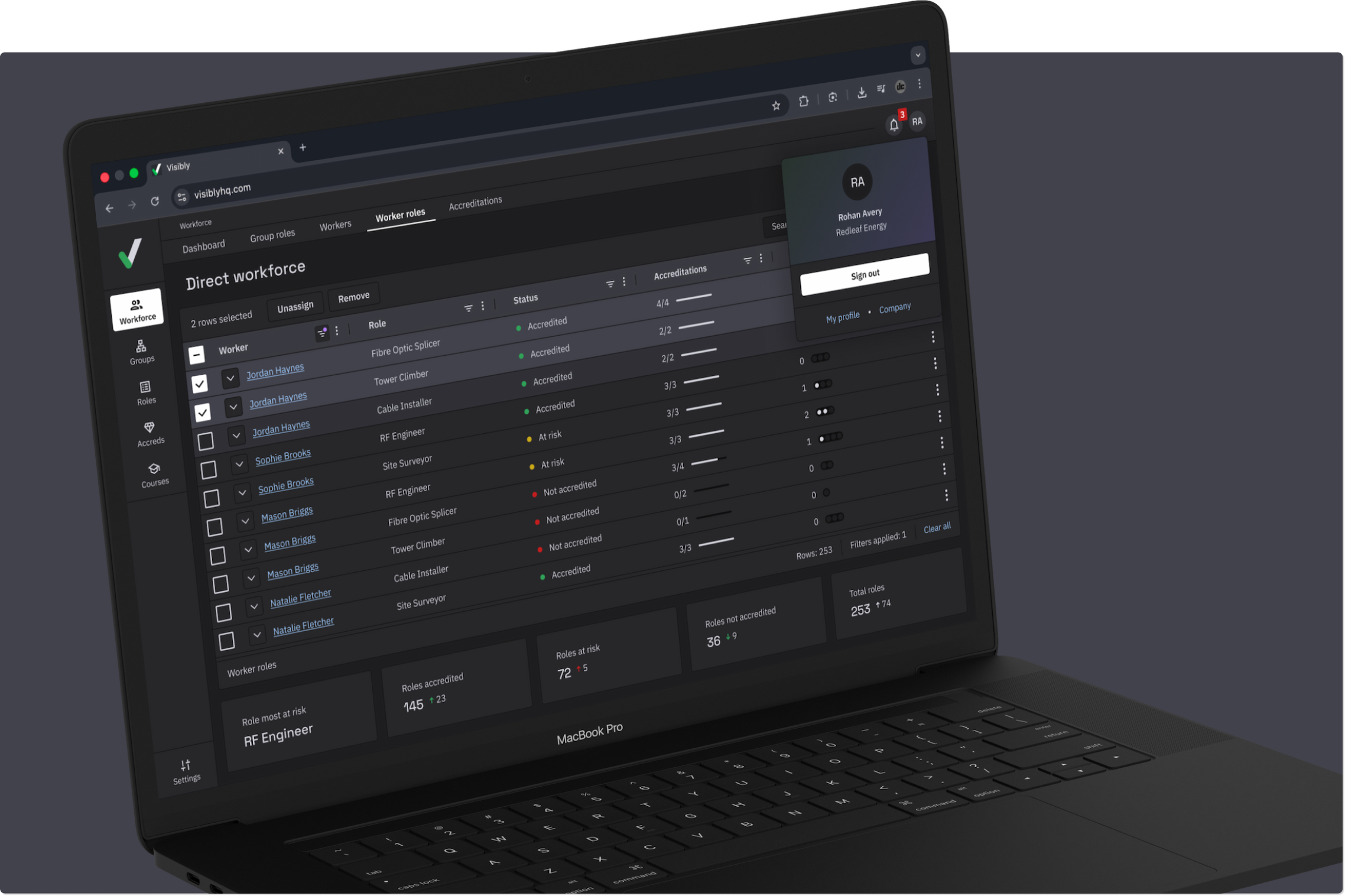
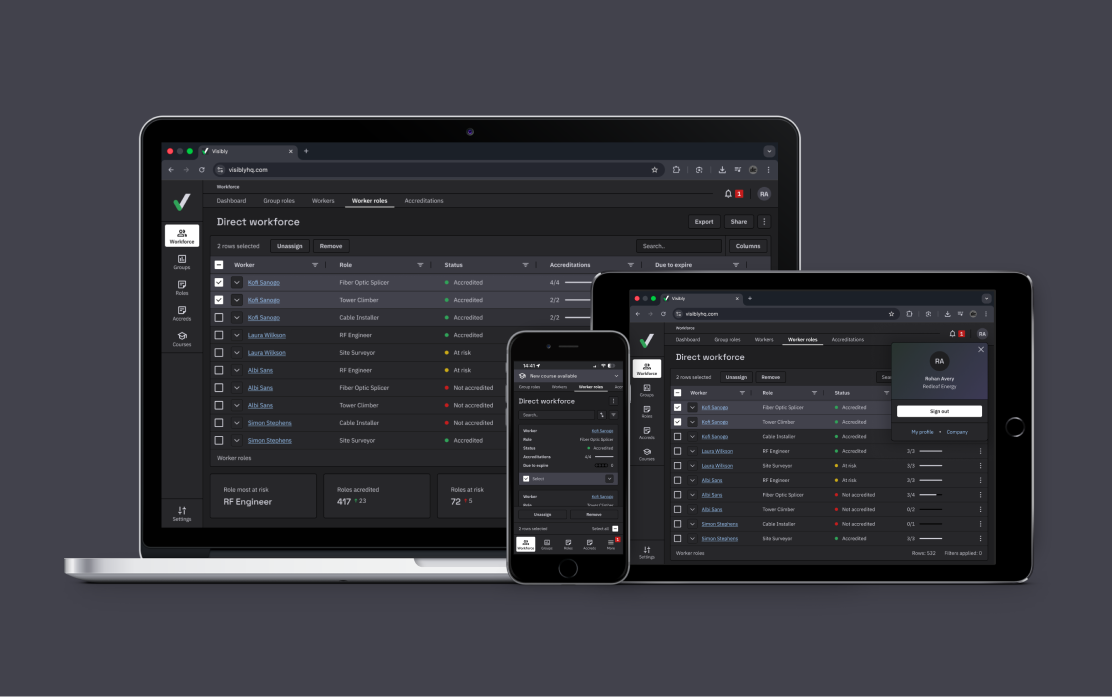
I created a commercially viable user interface design language.

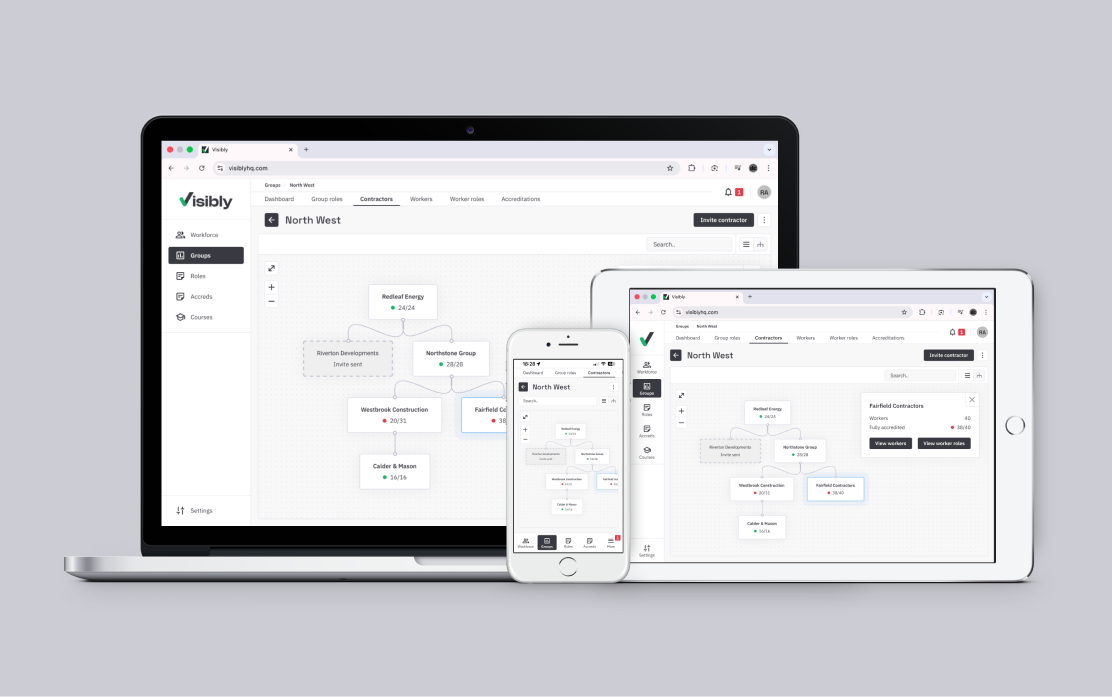
I designed the all of key product screens and components for desktop, tablet, and mobile.

I created a basic light and dark mode design system to maintain and document styles and components.

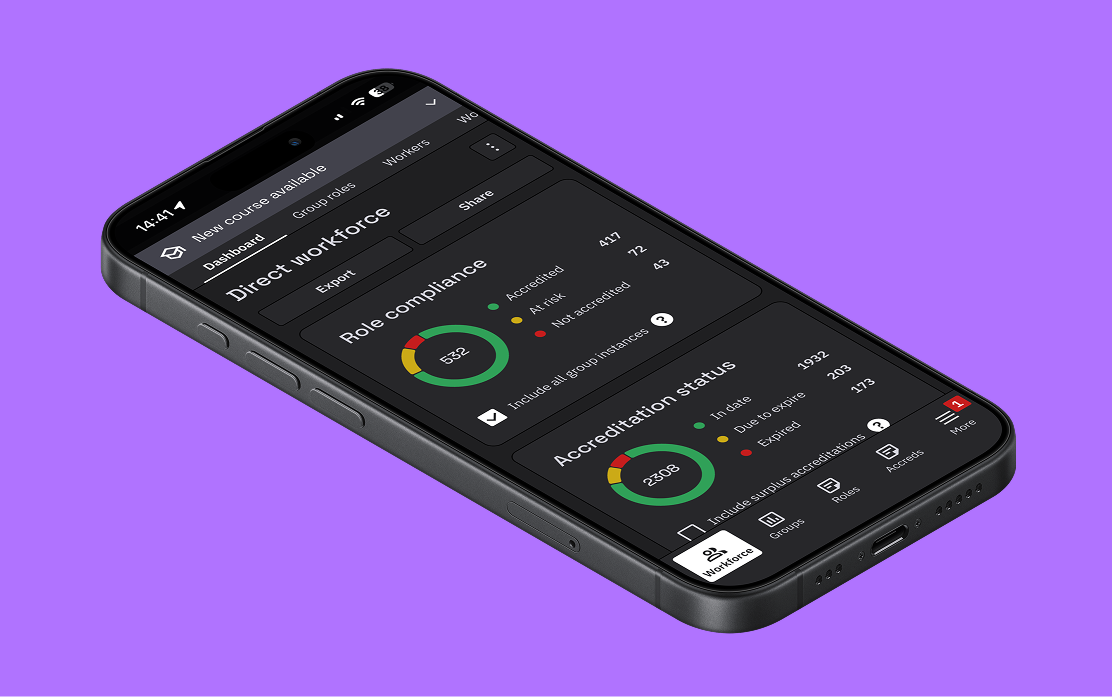
Workforce compliance dashboard

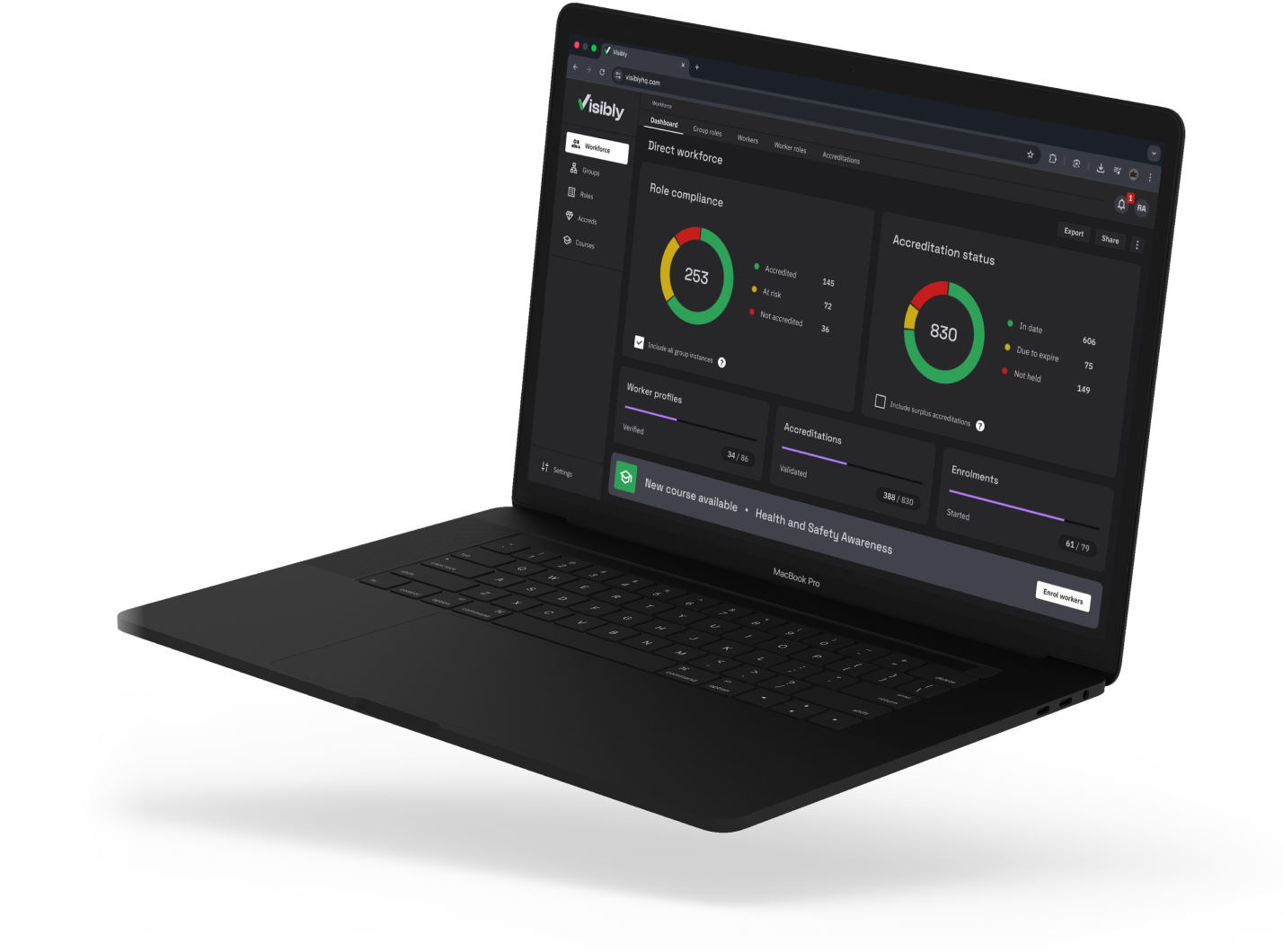
A data visualisation dashboard presenting a real time overview of workforce compliance

Workforce compliance dashboard Workforce compliance dashboard Workforce compliance dashboard Workforce compliance dashboard
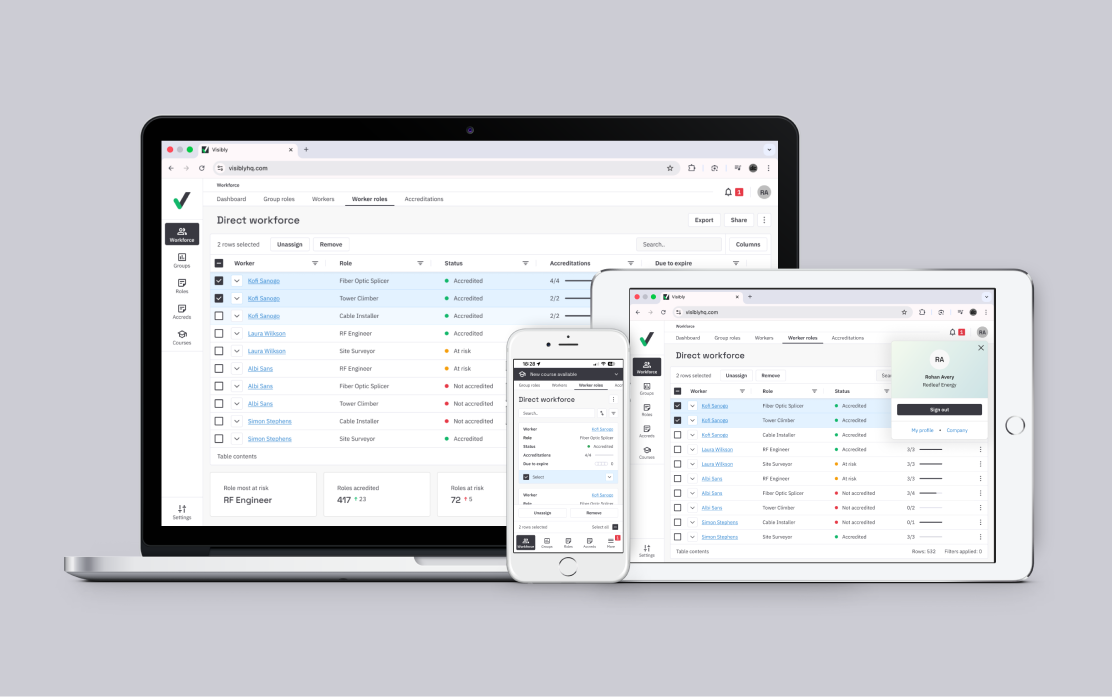
Workforce role compliance data table

A data table containing granular information on individual worker-role compliance

Workforce role compliance data table Workforce role compliance data table Workforce role compliance data table Workforce role compliance data table
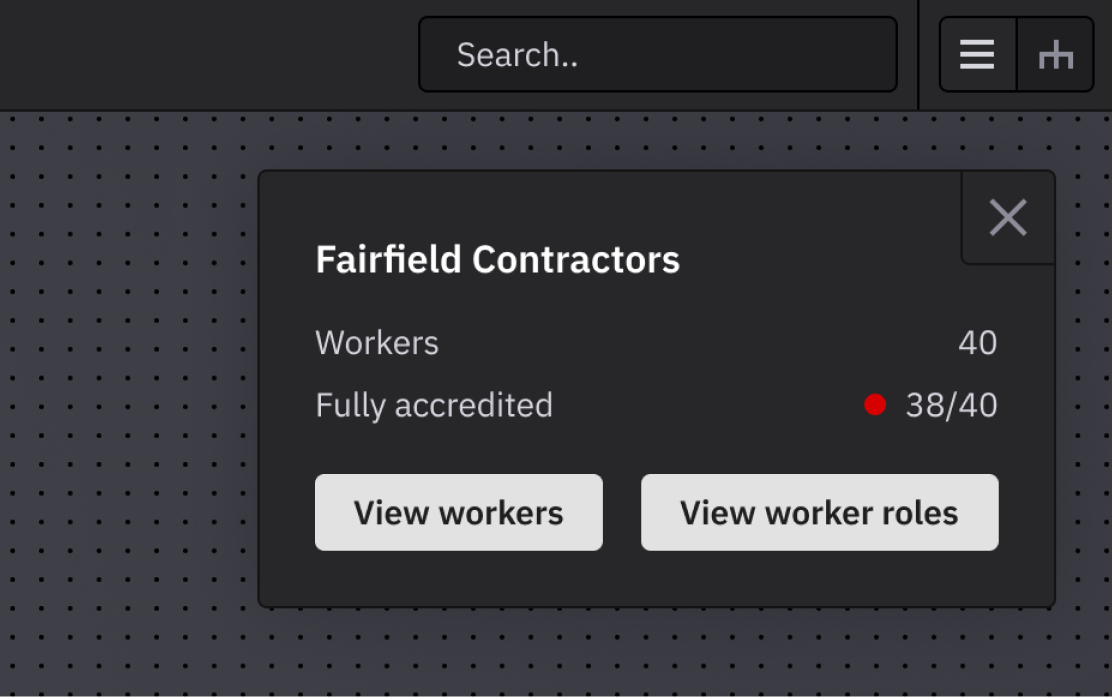
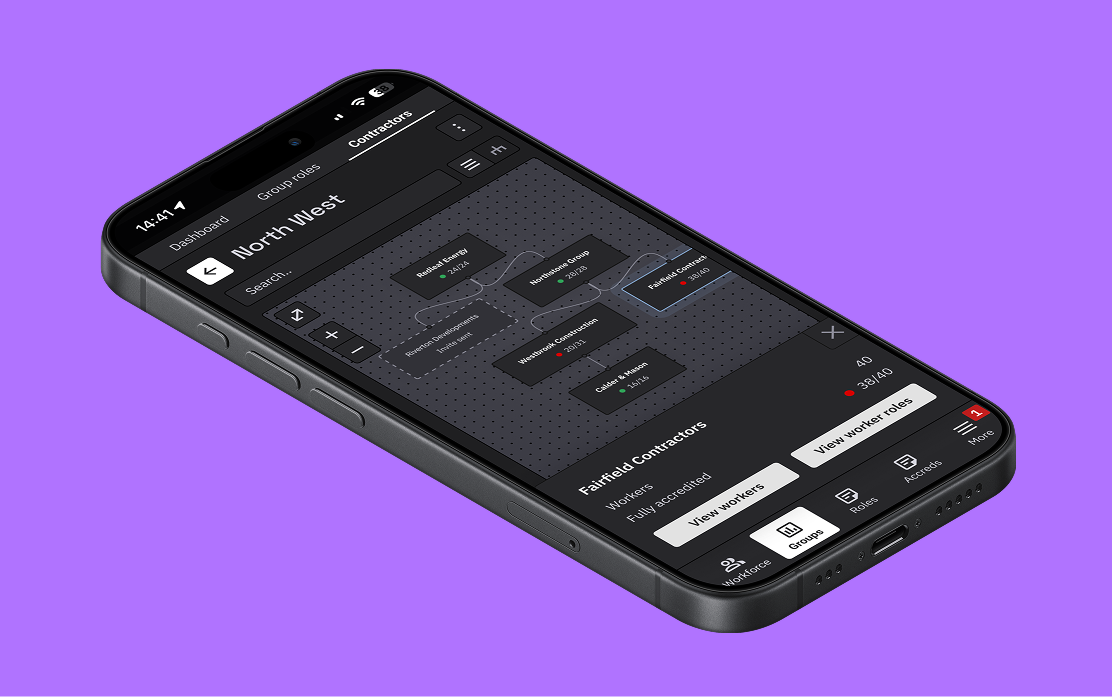
Supply chain compliance node network diagram

A node network diagram to pinpoint compliance anomalies within complex supply chains

Supply chain compliance node network diagram Supply chain compliance node network diagram Supply chain compliance node network diagram Supply chain compliance node network diagram

Development

The build began once I had validated enough of the core design to make up a customer-ready MVP.

During this stage in the project I

  • Wrote user stories and functional criteria
  • Ran backlog refinement and sprint planning
  • Collaborated with engineers to finalise the build
  • Worked with leadership on the product roadmap
Agile development

Customer onboarding

New customers were pitched to, acquired, onboarded, and set up as active product users.

During this stage in the project I

  • Set up a user feedback loop with the CS team
  • Interviewed customers to understand behaviour
  • Demoed and refined future features with customers
  • Designed a self serve sign-up and onboarding flow

Project two

Worker mobile app

Research and requirements

I returned to my customer research notes.

I had oriented the original customer interviews around requirements for the desktop web app, but I had also managed to uncover enough findings to produce a confident list of high level requirements for the worker mobile app.

Worker app research

Discovered core requirement

Covered by legacy product?

If so, done well?

E-learning courses for workers to up-skill and become role compliant

Real time visibility of worker's own accreditation status and role compliance

Ability to upload photos of training certificates for use as accreditation proof

Notification system for upcoming accreditation and role compliance status changes

System for receiving, consuming, and responding to workforce communications

Discovered core requirement

E-learning courses for workers to up-skill and become role compliant

Covered by legacy product?

If so, done well?

Discovered core requirement

Real time visibility of worker's own accreditation status and role compliance

Covered by legacy product?

If so, done well?

Discovered core requirement

Ability to upload photos of training certificates for use as accreditation proof

Covered by legacy product?

If so, done well?

Discovered core requirement

Notification system for upcoming accreditation and role compliance status changes

Covered by legacy product?

If so, done well?

Discovered core requirement

System for receiving, consuming, and responding to workforce communications

Covered by legacy product?

If so, done well?

Again, the findings showed the legacy product did not meet the core needs of prospective customers

Prototypes and testing

I designed the complete product MVP.

I went through four rounds of design with internal and customer feedback across one month to reach a product solution where all the core features stood strongly in their own right while also flowing naturally into one another.

Prototypes and testing

Video contains sound

Example feature

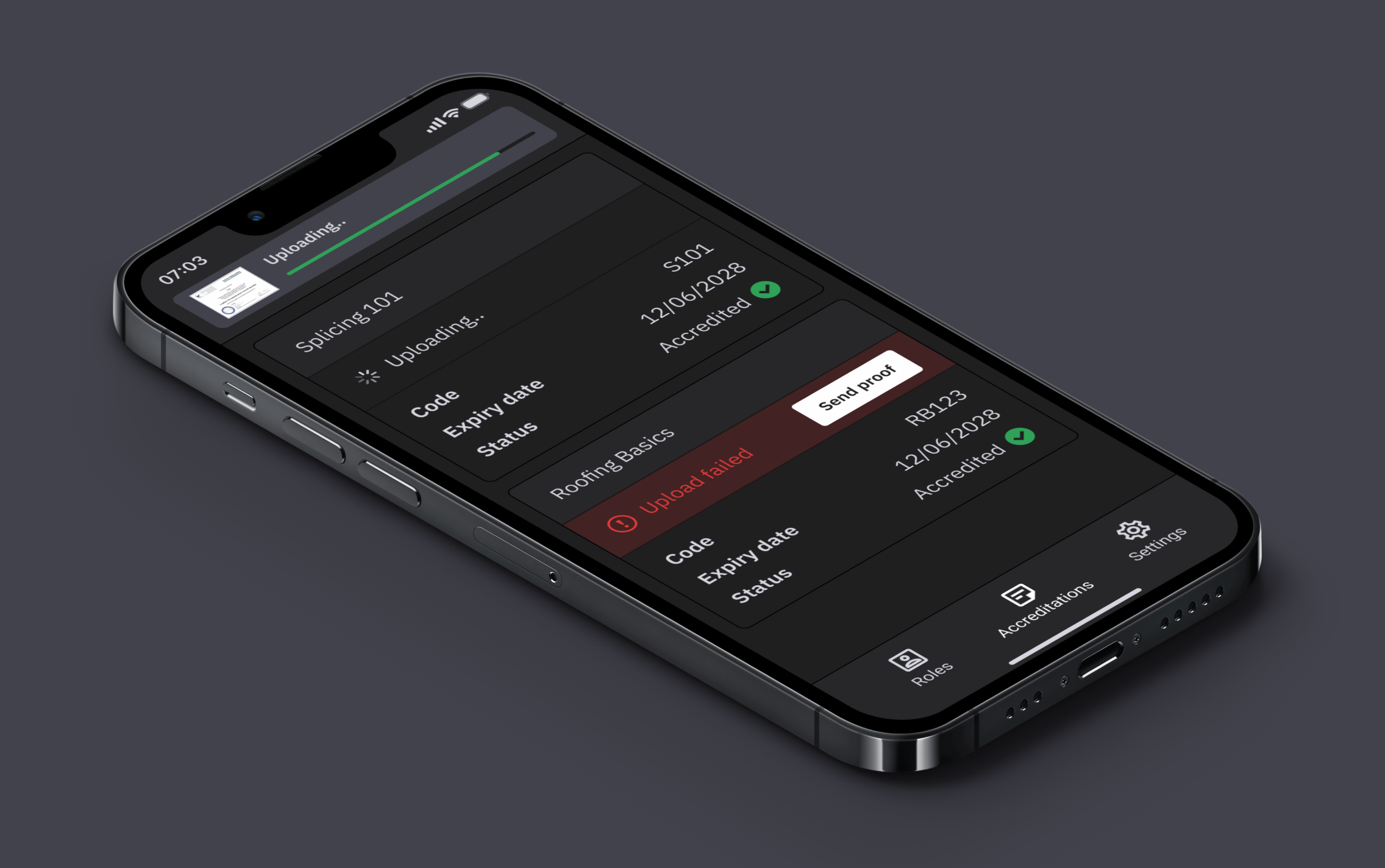
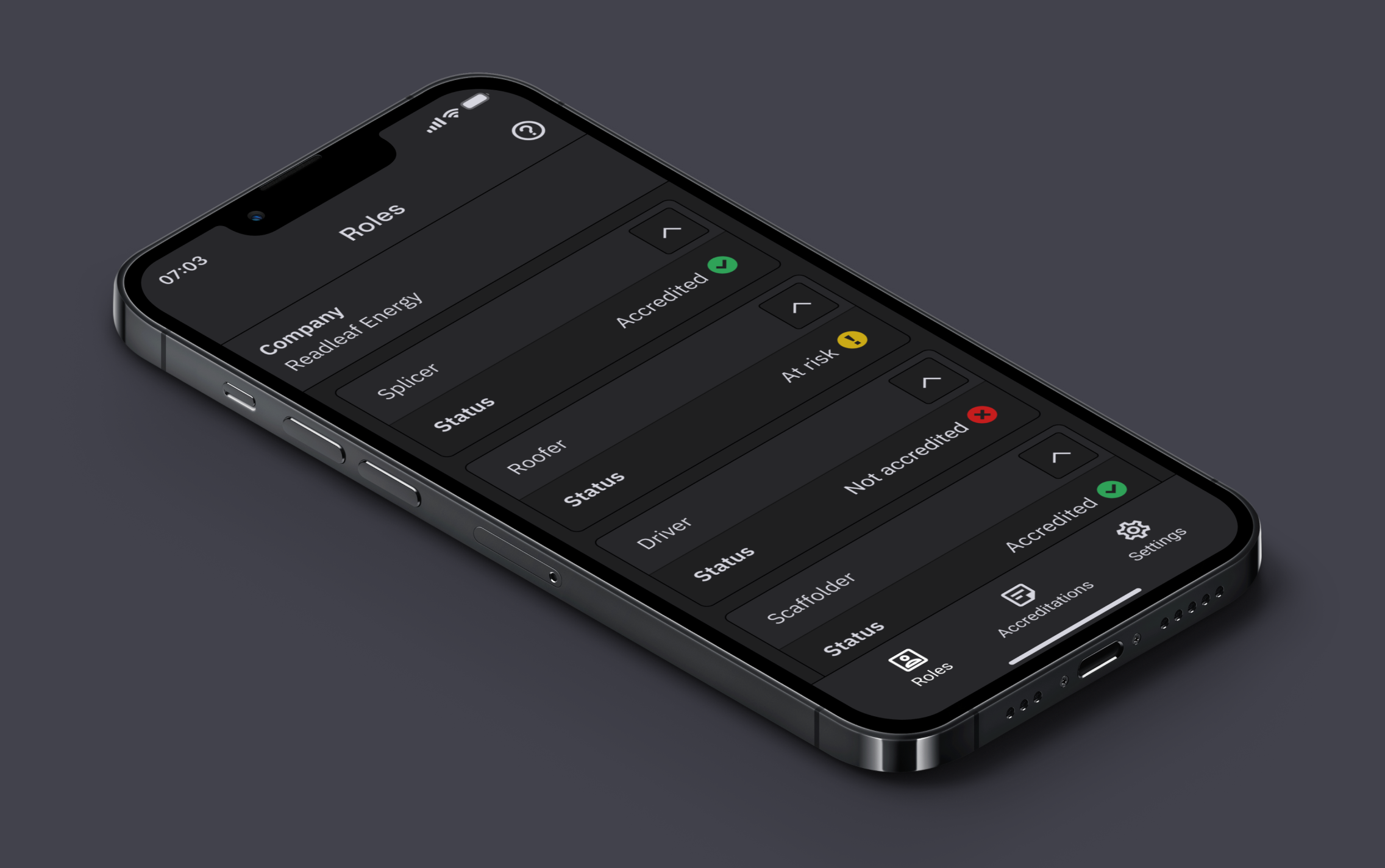
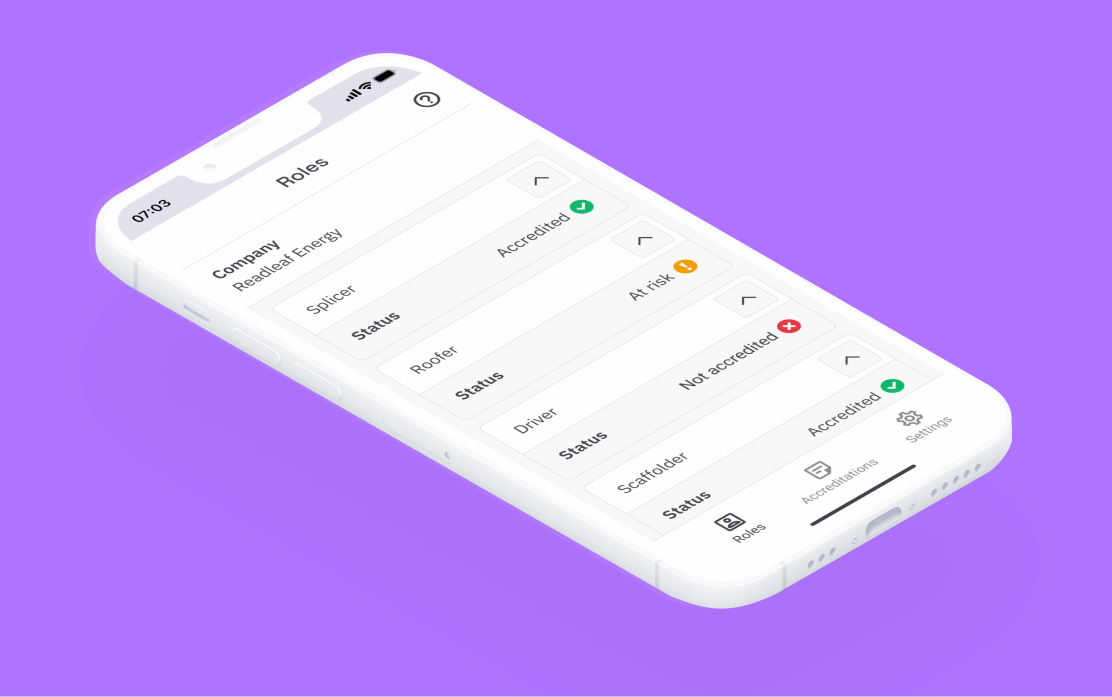
This page contains a list of the worker's live roles and their current compliance statuses, quick links into details and accreditation proof, and a favourites tab for worker role up-skilling.

Customers indicated this would help workers while being approached on site by inspectors, allowing for quick and easy compliance verification.

UI design

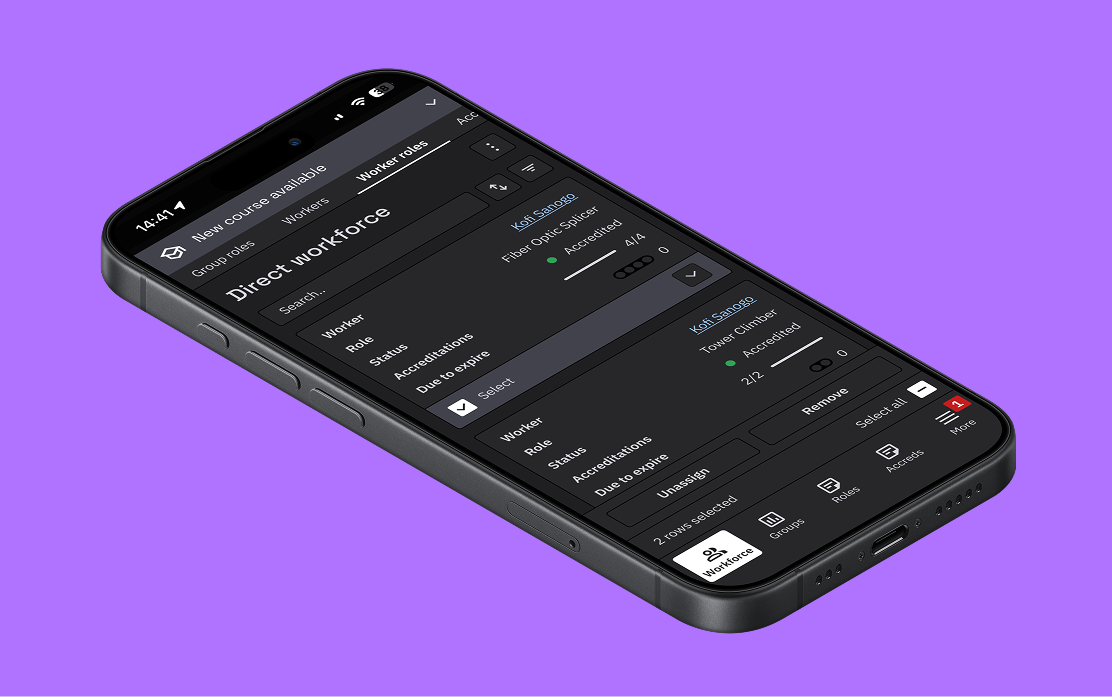
I repurposed the web UI language to create a mobile equivalent.

I designed the all of key screens and components to fit a wide range of mobile devices.

I created a mobile branch of the wider design system to maintain and document styles and components.

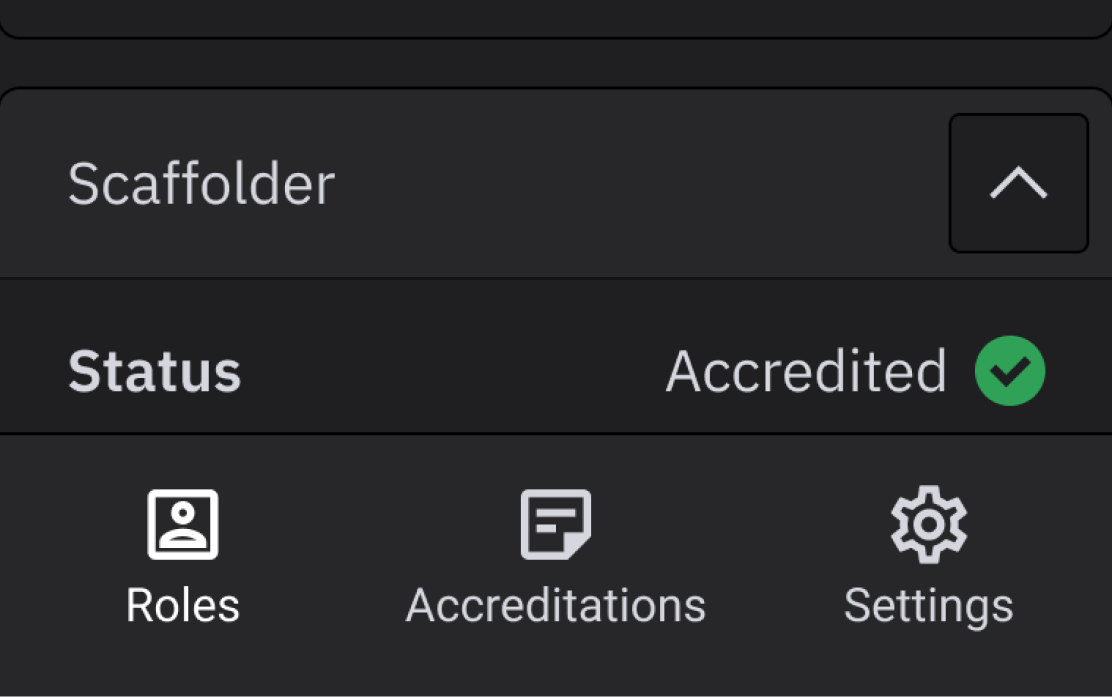
Worker accreditation cards

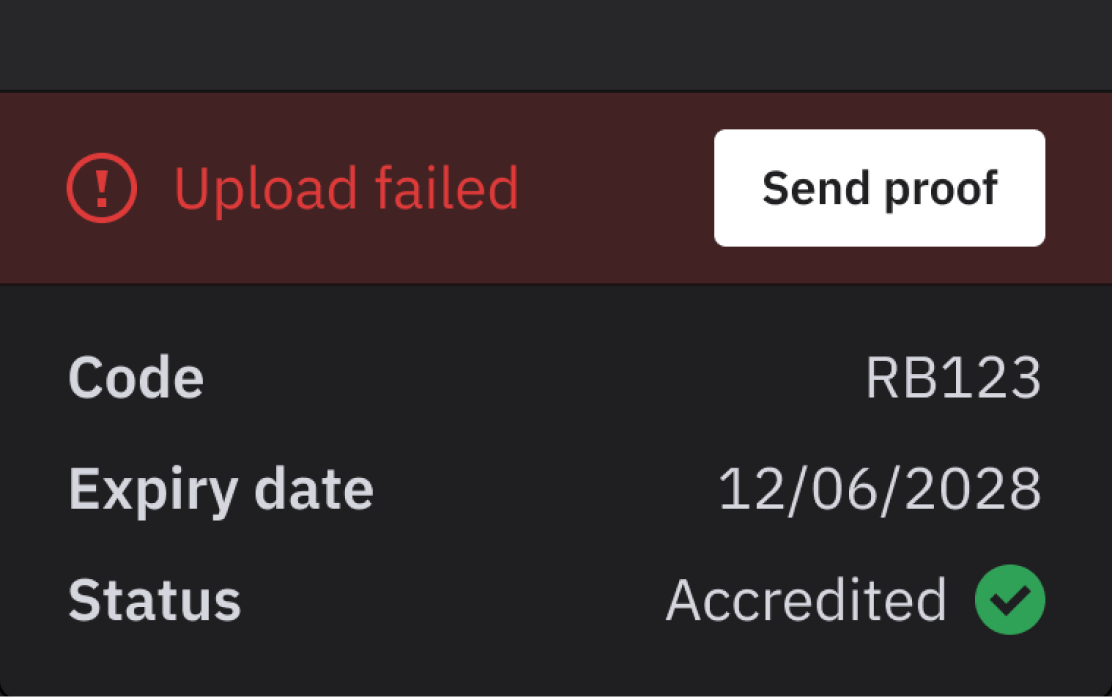
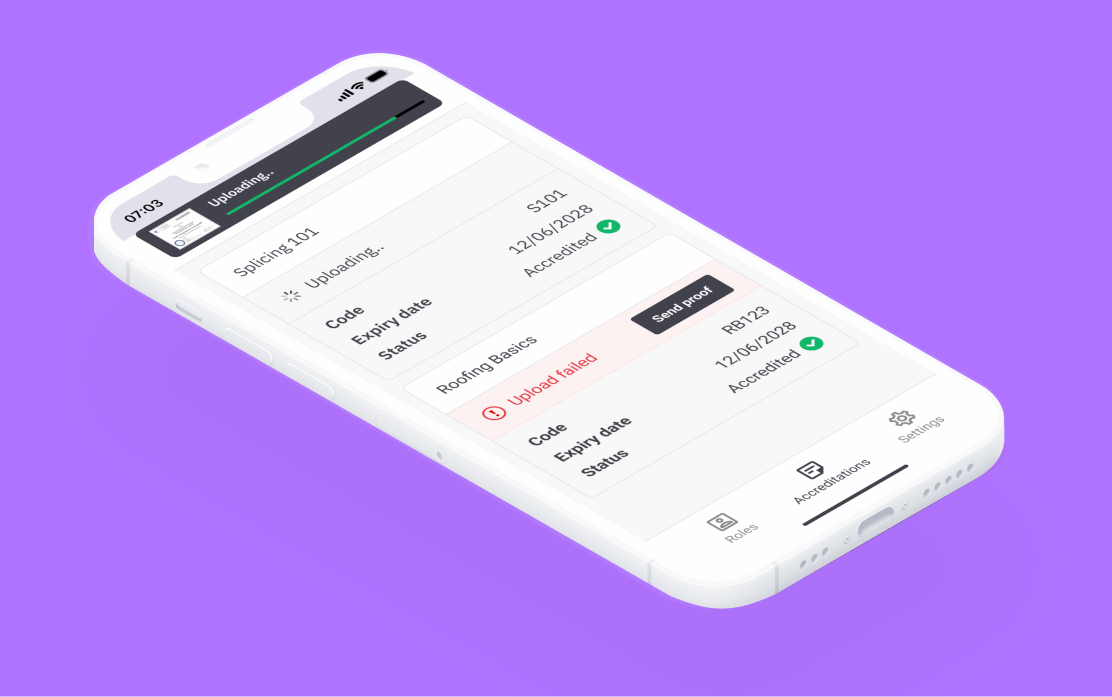
Accreditation cards that allow the worker to upload, store, and present compliance proof on-site

Worker accreditation cards Worker accreditation cards
Worker role compliance overview

Worker role compliance overview screen with quick links to role-related details and actions

Worker role compliance overview Worker role compliance overview

And then

Returning to business as usual

Business as usual

Post design and MVP launch

More customers were onboarded to both MVPs.

At this stage the business

  • Continued to improve and develop both products
  • Received a new round of funding from investors
  • Expanded the tech team by hiring a head of tech
  • Closed all offline verticals to focus solely on digital

Project retro

What was achieved?

Problems solved

Product-market fit with universal features

Order restored to the information architecture

Accessible and usable copy and UI language

Commercially viable product interface styling


Project takeaways

I do deliver under pressure - and - it's ok to blind-design AI features.

I was apprehensive about suggesting both products be started again from scratch. Leadership agreed quickly, but they were keen to launch the new products as soon as possible, as they were under pressure from investors. Despite this pressure, I had the bulk of the desktop product designed, in production, and being used by a growing customer base within four months.

AI assistant features were evolving rapidly around 2024, appearing in products such as YouTube, Brilliant, and Amazon. I designed the desktop AI features during this period, with few strong examples to learn from or use to validate technical feasibility. Despite the uncertainty, designing early proved valuable, allowing me to approach the work with a beginner's mind while gauging customer appetite through demos and feedback.

Next case study

Guru Systems SaaS platform

Guru Systems SaaS platform: Design system & UX/UI redesign

  • B2B
  • SaaS
  • Tech startup
  • Energy sector
  • Acquisition

I ran and delivered two design projects for a heat networks tech startup, allowing the business to win and retain new customers with an improved design and product experience.
View case study